Fighting Foxes

There are foxes in London.

Shortly after we moved here, when I first glimpsed one slinking down the street, I actually cooed, like we all do over a puppy. I know, I know… All of my London friends are shaking their heads at this silly Yankee but in my defense, although plenty of deer visited our house in Wisconsin, including an eight-pointer that engaged me in a staring contest (and won), I was not as familiar with foxes. So, I was a bit intrigued by the cunning little faces that often appeared at dusk.

During that same settling into London time when emotions were raw, one of the songs I listened to repeatedly was Audrey Assad’s Good to Me.

Here’s one of the lines:

And the foxes in the vineyard will not steal my joy.

This line floated into mind whenever I spotted a bushy red tail, still naive as to how these solitary creatures might be joy-thieves. Honestly, I felt a little sorry for them. So battered and scrawny looking (not quite like the above handsome Image by rottonara from Pixabay ) Always alone. They seemed harmless enough.

And then this happened:

And then it happened again.

And again.

Garbage disposals aren’t a thing here, so food waste goes in biodegradable bags which are collected on rubbish day. Unless a fox intercepts it and has a picnic in the middle of the night. Which happens. A lot.

Not only do the foxes manage to pick the latch to the bin, shred the bag, toss the eggshells all over, pick through what they want and have a food fight with whatever they reject, they then have the audacity to leave behind foul-smelling piles. As if to say, ha ha Loser, I won. (sidenote: I have a friend who has an even better – and therefore worse – story of a fox entering her house during the night, ransacking what he could find in the kitchen, and making an unwanted deposit on her sofa.)

Yes, foxes steal joy.

We thought we had ‘done enough’ to keep our sly thief away by securing the latch on the food bin. But the rascal kept getting in. Apparently, there’s an art to keeping the foxes out. Our neighbor showed us how to trap the food bin with the bigger wheelie bins. It takes more effort but so far that’s working. Fingers crossed.

Back to the foxes and vineyard line. What’s that about? The above song lyric is loosely based on Song of Solomon 2:15.

Catch for us the foxes,

the little foxes

that ruin the vineyards,

our vineyards that are in bloom.

Look it up in context and you’ll see these rather obscure words were spoken at a wedding, sandwiched between ‘your face is lovely, and your voice is sweet’ and ‘My beloved is mine and I am his’. So why talk about foxes at a time like this?

I haven’t conducted an in-depth study but maybe because what is good, like a vineyard or a relationship, can be ruined by something bad, like a fox or destructive behavior. So be on guard.

Taken literally, a fox would eat up, trample on, and defecate on a place that is meant for sweet-smelling, fruit to flourish. Vineyard owners must root out foxes. Their livelihood depends on it. The fruit must be protected. And it’s best to catch those foxes when they’re little to minimize the damage.

As followers of Christ, we are called to bear fruit… to do good works that glorify our Father in heaven (Matt 5:16). We are not saved by the good that we do; we are saved so that we can do good. But something can steal our joy, our peace, our time, our patience, our fruit.

In a word, sin. Other people’s sin and our own. It’s easy to brush off our own sin, even attempt to laugh it away. Sin may look relatively harmless. Why make such a big deal of it? How archaic. How unenlightened.

But sin is a sly fox. It leads to destruction and death. Sin has always been the problem, and it’s very much the problem now. For you and for me, for our children and our neighbors.

I used to think foxes were harmless, now I know they are destructive. Foxes are on the prowl to devour. Foxes will not simply disappear, nor will they change their ways. We had to change our ways in order to prevent the destruction they caused.

I don’t hate foxes, (to be honest, I still find them fascinating) but they do make an apt comparison to sin:

Sin may seem harmless, but it destroys. Satan, the father of lies who can masquerade as “good”, is on the prowl to devour. Sin is real and it will not simply disappear. (But it won’t exist in heaven, hooray!) We have to rely on God, on his Holy Spirit, to change us and to teach us say no to sin as we:

Confess our sin. If we confess our sins, he is faithful and just to forgive us our sins and to cleanse us from all unrighteousness. 1 John 1:9

Flee from sin. But as for you, O man of God, flee these things. Pursue righteousness, godliness, faith, love, steadfastness, gentleness. 1 Timothy 6:11

Know and obey God’s precepts. I rejoice in following your statutes, as one rejoices in great riches. Psalm 119:14, (but really all of Psalm 119)

Fully trust in Jesus. There is therefore now no condemnation for those who are in Christ Jesus. For the law of the Spirit of life has set you free in Christ Jesus for the law of sin and death. Romans 8:1

Throughout our lifetime, we will continue to sin. We will need to ask for forgiveness and we will need to forgive others. Resting and relying on God’s grace isn’t our license to coddle our sin, to take a sly fox and treat it as a pet.

As we head into Easter, maybe you’re more familiar with colored eggs and chocolate bunnies and less familiar with how Christ took care of our sin problem when he died and rose to life. Maybe you don’t know that he left to prepare a home for us that will be free from sin and pain. Why not read through the gospel of Luke and ask God to reveal himself to you?

It’s the best news ever. Death was conquered. The mess of our sin taken care of. Forgiveness offered. Maybe you don’t know, or have forgotten, that God’s story of redemption can include you.

Christian, seek him.

Doubter, seek him.

He is the only, ultimate answer to life’s mess, the slayer of our sins.

Buried Truth

“Relativity” by M.C. Escher

What is truth?

Such is the question Pilate, governor of Judaea, posed to Jesus, the very person who shockingly claimed, ‘I am the Truth’.

History is full of sages who have grappled with the notion of truth: 

Socrates: Lies are the greatest murderer. They kill the truth.

Buddha: Three things can not be long hidden: the sun, the moon, and the truth.

Gandhi: An error does not become truth by reason of multiplied propagation, nor does truth become error because nobody sees it. Truth stands, even if there be no public support. It is self-sustained.

Good stuff.

I’ve been pondering truth lately and I’d venture to guess some of you have been as well. No matter where you land politically or what media sources you subscribe to, discerning what is true can be exhausting. You and I may have a different perspective on any given current issue, (and there are an exhausting number from which to choose) but we could probably find a little unity in the fact that we are just plain tired out. We are weary and wary of what the world holds up as ‘truth’. We want the truth, at least we think we do, but often it seems buried, hidden, hard to pin down. As I’ve been reading through 1 Kings, I’ve been both comforted and disheartened to see how the world has always been a tough place for truth.

Fraught with political drama, corruption, and reluctant prophets, 1 Kings ends with evil king Ahab obsessing over a vineyard, a vineyard that belongs to a guy called Naboth who, rightly so, wants to hang on to his property. To acquire the vineyard, Ahab’s evil queen Jezebel writes letters to various leaders and elders, (apparently already corrupt given how quickly they acquiesce) with a plan, to task (probably with a bribe) two ‘worthless men’ to publicly and falsely accuse Naboth of ‘cursing God and the king,’ and then let the mob take over. I confess, I didn’t remember how this story ended and I found myself hoping that God would sweep in and set things right and rescue poor Naboth.

He doesn’t. The horrific plan proceeds without a hitch. The leaders are unified in their corruption and the masses buy the lie. Mob mentality takes over and Naboth is stoned to death. The dogs lap up his innocent blood as it runs down the street.

I know. It’s sickening. The truth doesn’t seem to matter. The truth didn’t save Naboth.

Enter the prophet Elijah.

Ahab and Jezebel already hate him. Ever since the epic battle on Mt. Carmel when the Lord showed himself to be the true God (1 Kings 18), the devious duo has been actively trying to kill Elijah. Jezebel has already killed many of the Lord’s prophets, and now the blood of Naboth is on her hands. Elijah must have been shaking with righteous fury as he proclaims the Lord’s words to Ahab: “In the place where dogs licked up the blood of Naboth shall dogs lick your own blood… and the dogs shall eat Jezebel…”

Gruesome.

For a while, nothing happens. In fact, it seems as if Ahab and Jezebel have, quite literally, gotten away with murder. Until they team up with Jehoshaphat to defeat the Syrians. Jehoshaphat suggests they ask the Lord, through the prophets, before engaging in warfare.

Enter about 400 prophets. Go for it, they all say. God will deliver the land into your hands, Ahab.

But Jehoshaphat is suspicious. History has proven that these ‘prophets’ aren’t really prophets at all; they don’t speak the truth. They only say what King Ahab wants to hear. Jehoshaphat asks, “Is there not still a prophet of the LORD here, that we may inquire of Him?”

Enter the prophet Micaiah.

King Ahab hates this guy, too. “I hate him, for he never prophesizes good concerning me, but evil”. (22:8)

The king’s assistants beg prophet Micaiah to go along with everyone else and just tell the king what he wants to hear. And at first Micaiah does. Go and prosper, for the LORD will deliver it into the hand of the king, he says.

But his tone is mocking. Flat. Perhaps it’s a bit like Willy Wonka, played by Gene Wilder, when he says without an ounce of emotion, “Stop. Don’t. Come back.” Words don’t matter when people aren’t listening.  

Ahab detects Micaiah’s sarcasm and demands the truth.  

So Micaiah gives it to him: “The Lord has put a lying spirit in the mouth of all these prophets, the Lord has declared disaster for you [Ahab].”

Talk about going against the masses! 400 to 1 aren’t pretty odds. Ahab and the false prophets can’t handle the truth and Micaiah gets a swift slap by one of his ‘colleagues’. As he’s forced out the door, he calls out one last prove me wrong: “If you [Ahab] return in peace, the Lord has not spoken by me!”

And what happens? Exactly what the Lord, through the mouths of Micaiah and Elijah, said would happen. Defying the odds, an arrow ‘randomly’ strikes King Ahab between the scales of his armor and on the long chariot ride home he bleeds to death and the dogs lick up his blood. In time, Jezebel is pushed out of a window and devoured by dogs. (2 Kings 9:32-35)

Gandhi was right about one thing: Truth stands, even if there be no public support.

The Bible is full of harsh, historical accounts because the Bible tells the truth, even when the truth is ugly. One of these not so pretty truths concerns us, as humans, and our problem with the truth:

The heart is deceitful above all things and beyond cure. Who can understand it? ( Jer. 17:9)

If this was the only piece of scripture, this would be plain depressing. If you and I and everyone who has taken a breath is prone to deception, both deceiving and being deceived, what’s a soul to do? Where is the hope? What is the cure?

Enter Jesus. The fulfillment of the prophets.

I am the truth, he said.

He not only spoke the truth, he claimed to be the Truth. Nice teachers don’t say such things. Socrates, Buddha, and Gandhi for all their wisdom regarding truth, they never asserted to be truth.

Jesus did. And this turned the religious establishment on its head. Jesus, who paid our debt with his blood so that all peoples of all nations could be reconciled to God, was loved by some and hated by many. Jesus, The Truth, was mocked, killed, and buried. For three dark days The Truth lie motionless in a cave. But no amount of earth and dust can bury The Truth forever. Lies or deception can’t change what is truly true. And true to his word, true to the prophets, true to the will of his Father, Jesus truly rose from the dead.

A wild, even divisive claim? Yes. But this is the claim on which the entire Christian faith is hinged. Either Jesus rose from the dead or he didn’t. Either he is God, or he isn’t. Either he is Truth, or he’s the world’s most profane liar. The reason why Jesus is the Prince of Peace, and why we as believers can find rest for our weary souls and comfort for our troubled minds is because Jesus is The Truth who sees the hidden places and is sovereign over all things. Even now. Even in 2020.

He is The Truth who sets us free. may we recognize him as the source of truth and rest in his life-changing words: I am the way and the truth and the life. No one comes to the Father except through me. (John 14:6)

(To further investigate the resurrection, check out The Case for Christ by Lee Strobel)

Mission Impossible

( originally published https://blogs.efca.org/posts/mission-impossible EFCA)

I am not moving to London.

At least that’s what I told God from our rented room on the top story of The Forester Pub in west London. It was the third night of our family’s vision trip, the culmination of months of praying, counsel-seeking, investigating and eventually applying and interviewing with ReachGlobal. This vision trip was designed to help us determine the fit; to help us answer the question, Is God calling us to join the mission field in London?

Three days in and my answer was no. God was not calling us to the mission field in London. My emotions, common sense, as well as the dynamics of our family rallied against taking such an absurd turn at this juncture in our lives.

But the problem was Doug, my husband, had already moved to London in his head.

At the time, all I could see was how this wasn’t going to work. I couldn’t see our family leaving our Wisconsin hometown and church of 20 plus years to live among the nine million Londoners hailing from every corner of the world. I couldn’t envision trading our house and cars for small living quarters and London’s daunting transportation system. I couldn’t picture starting over from scratch, in our mid-forties, saying goodbye to family and lifelong friends. And I certainly couldn’t imagine breaking the hearts of our eleven and seventeen-year-old by plucking them from their youth group, friends and school, and plopping them into a completely different culture, school system and church experience. What kind of parent would do that?

Yet even my fear couldn’t blind me from seeing how God had worked to bring us to this point.

Historically speaking

Years before “global missions” was even on our radar, Doug and I stayed with missionary friends in France. After listening to the struggles of serving overseas, I uncharacteristically burst into tears and said, “I don’t know if I could do what you’ve done. If God called us overseas, I don’t know if I could follow!”

You see, even though God wasn’t calling us overseas, Doug and I sensed the winds of change were about to blow. We explored several career moves, all resulting in eventual dead ends. We prayed for our future, without really knowing what we were praying for. One day, I opened my cupboards and was overwhelmed with the impression that soon I would need to pack all these dishes. These incidents seemed odd and arbitrary—but God was priming us to move.

In the spring of 2016, Doug came home from a trip to a partner church in Paris. One of the men working with him was a Londoner, and he told Doug: “London needs missionaries, too.”

Nine years earlier, we had visited London. While strolling through Regent’s Park, I blurted out, “I want to live here!” I absolutely loved London—that is, when it didn’t require anything from me.

But London needs missionaries? No way, God.

An opportunity arising

Intrigued by the conversation he’d had with his new London friend, Doug meandered over to the EFCA’s site and clicked on serving opportunities under ReachGlobal. The first thing that popped up was Director of Performing Arts in London. For a worship pastor and freelance writer, this was too intriguing to ignore.

“We have to at least email them,” Doug said.

“Why not?” I said. What harm could an email do? Surely London would end up being yet another dead end.

The email led to a phone call which led to a Skype call which led to further Skype calls which led us to EFCA’s national office in Minneapolis for interviews which led to training. With every step, I kept expecting the door to shut. We felt like we were daring God. In reality, he was daring us: Take another step forward and keep your eyes on Me.

During training, we were presented with an impossible number: the financial support we’d need to raise that included a livable salary in an expensive city, overseas moving and ministry expenses and health care taxes. I didn’t know whether to laugh or cry. This number was unachievable. No way would we be moving to London. But underneath my initial sticker shock, I believed God could do whatever he wanted; He is sovereign over our finances.

Throughout the three days of training, my panic grew. Were we really going to pursue this crazy endeavor? On the last afternoon of the last day, I sat in the chapel, Doug beside me. Realizing I had hit some kind of emotional wall, Doug pulled out his Bible app and read Mark 10: 29 – 30:

“Truly I tell you,” Jesus replied, “no one who has left home or brothers or sisters or mother or father or children or fields for My sake and for the gospel will fail to receive a hundredfold in the present age—houses and brothers and sisters and mothers and children and fields, along with persecutions—and in the age to come, eternal life.”

“I don’t want the hundredfold!” I cried. “I want to hang on to the life we have now.”

Even so, even then, my fear of disobeying God was greater than my fear of obeying him.

Whose vision anyway?

About a month later, I found myself across the ocean on our so-called vision trip, desperately needing to snag a private moment with Doug to tell him this wasn’t happening. I was sorry we’d come all this way and invested so much, but I couldn’t do this. I thought maybe I could, but I was wrong, and would he like me to help him revamp his resume so we could get on with plan B?

It was around 10:30 p.m. when we realized we were missing a backpack full of valuables. The day had been peppered with more than a little squabbling, misread directions, and turbulent emotions. While our daughter did homework on her bed and Doug and our son headed out in hopes of finding the missing backpack, I closed myself in the bathroom to pace and cry and have it out with God.

I don’t know what you’re up to God but please don’t do this to me. Please don’t move us to London. And we’ve lost the backpack! Please help the guys find it, with everything intact. And another thing, you see how upset my son is. Do something. Help him open up to Doug as they walk. And lastly…

I stopped myself. Bringing this next request to God was opening the door for Him to work, and part of me didn’t want to give Him the chance. Part of me wanted to grab the kids and jump on the next flight home. But what else was I to do? To whom else could I turn?

And lastly, I do not want to move here. I’m not moving here, not with my heart like this. So here’s the thing God. If you really want to move us to London, you’re going to have to do something and do something big. You’re going to have to turn my heart around. Otherwise this isn’t happening. So good luck with that.

Then, I went to bed making a mental list of the school districts I’d apply to back in Wisconsin for full-time work so that Doug had the freedom to figure out his next career move.

The power of prayer

Half an hour later, the guys crept back into our room. Doug slipped into bed beside me. “We found the backpack,” he whispered. “Can you believe it? Six hours it sat at the pub we popped into earlier to catch the game. Completely untouched. Everything is there.”

Prayer number one? Check.

“And Elijah and I had the best talk. He opened up to me about some of what he’s struggling with. It was so, so good.”

Prayer two? Check.

“That’s great,” I whispered back as my heart began to race.

Two out of three. Not bad, Lord. But prayer number three was the real test. Could God really change my snarky, stubborn heart?

The remaining week of our vision trip didn’t provide me with absolute clarity, but it did afford me glimpses of what might be.

We clicked with our would-be team leaders and their teenage kids. We stepped into what would end up being our home church and something in my spirit settled. I was learning to see past the fear and foreignness to a future God might make possible. There was no burning bush. No clear writing for us on London’s graffitied walls. But by the end of the trip, I felt an undeniable impression that God wanted us to continue moving forward on this path that seemed impossible.

We couldn’t move ourselves to London. God would have to do it. We could only take faithful, wobbly steps and trust Him to do the rest.

Where we landed

I would love to say the two years between our vision trip and move were a breeze. Even as God brought in our needed support, I struggled with 2 a.m. panic attacks. We sold our house, re-homed our dog, and rid ourselves of most of our belongings. Mere months before our move, our son graduated from high school: he would attend college in the States, and we would leave him. Our thirteen-year-old daughter would essentially become an only child—one who did not want to move to London.

What kind of parent does this? I continually questioned both before and after the move. Was an international move even wise? Would God prove faithful to our family or would we implode?

My daughter, my husband and I landed in London in October of 2018. These past two years have been wonderful and terrible. We have struggled with bouts of depression and bursts of elation, sometimes the very same day. He has proven Himself faithful, profusely kind, and merciful to all four of us.

Flaming bushes are the exception when it comes to God’s calling. He is more likely to cast light on the path as we stumble along than drop a pin to mark a clear destination. He asks us to follow His voice, His word, His Spirit when we can’t see what He’s doing.

God’s surest call in all of our lives, no matter if we’re heading to the global mission field or not, is to transform us to be more like Jesus. Might He be calling you to step out? Into a ministry or mission that seems beyond your ability, comprehension, or desire?

Callings are not isolated paths, separate from our daily Christian walk. Callings are composed of tiny steps of obedience in both the spiritual and mundane. Sure, our calling comes into focus through Bible reading and prayer—but also through our financial responsibility, relational integrity, and humble hospitality. As we follow and obey in ways that feel small and obvious, God may be paving the way to something new, to places we can’t see yet. God who dried up the sea, filled the virgin, and brought back the dead is God of the impossible. He meets us in ours.

Training the Thumb

If I’m honest, summer 2020 lockdown included too much scrolling. Too often I reached for my phone and scrolled and scrolled and scrolled, past pandemic statistics, protests, half-true statements, videos without context, videos with too much context, riots, memes, and flash sales. Like a leashed dog wheezing next to her master on a motorbike, my mind scrambled to keep up with my ever-swiping thumb:

I don’t trust this article.

This one I believe.

This one is insanity… or maybe it’s satire?

Oh, Jesus would wear a mask.

Oh wait, I guess he wouldn’t.

Woah, great price for a blouse!

But I read something about about child labor…

How many kids were found?

How many deaths were counted?

How many tests were taken?

How many votes are needed?  

The Struggle is Real.

Or is that my privilege speaking?

I’m no scientist, but this can’t be good. For a mind that can unravel and race all on its own, with no help from the internet, this ceaseless ping-ponging of one idea to the next, one video clip to the next, one scary statistic to the next, cannot be good. I feed off my news feed and, as evidenced by my tailor-made adverts, it feeds off me and the whole thing begins to feel rather cannibalistic. Frenzied. Panic-inducing. Staying informed is one thing but an endless intake of social media, news, and commentary is recipe for mental and spiritual indigestion. Our silly little man-made computers malfunction when we cram their memories to capacity. How much more do we?

So my negative takeaway from the summer? My thumb is prone to over-scroll.

But this summer my thumb also turned the pages of my Bible in a wonderfully unhurried way. I hope my sharing this is encouragement, a spurring on rather than a spiritual brag: I have enjoyed my times with the Lord, in the word and in prayer, like never before. Ever so slowly I’ve been working my way through the Bible in a self-directed three four year plan which consists of checking off the books as I go, color coded by year, and periodically turning to First 5 (a wonderful app with which I have no affiliation) for deeper reflection. This slow feasting on the word lays in stark contrast to my moments of frenzied social media consumption. During lockdown I feasted on the book of Job, 1 and 2 Corinthians, Micah, and 1 Samuel. Unrushed reading, meditating, and digesting. Unhurried journaling, sketches, ponderings, and prayers. I feel full and satisfied from this summer’s feast.

Man shall not live on bread alone, but on every word that comes from the mouth of God. – Jesus (Matt. 4:4)

Man, and woman, and teen can’t live on continuous social media, either. Not that we can blame nebulous Social Media, as if Social Media is a demanding boss and we mere subordinates with little control over how we spend our time. We are grown-ups. We are in charge of our thumbs. I decide if my thumb is going to scroll Facebook, turn the pages of the Bible, or get some work done. James admonishes believers to tame the tongue; perhaps our thumbs need a bit of taming and training as well, since they grip our phones and TV remotes and have a big say in what we’ll mentally ingest.

Oh be careful little thumb what you scroll.

As every parent knows, we gain an appetite for what we regularly ingest. We can’t make ourselves like or dislike something, as this evolution of taste is somewhat beyond our control. Yet what is in our control is what we put on our tongue and in our minds in the first place. Before moving to London, I couldn’t stand sparkling water. But after nearly two years of mistakenly ordering/buying what I presumed to be tap or ‘still’ water and ending up with sparkling water, after two years of resignedly sipping it to impartially swallowing it, I now, to my surprise, choose and enjoy it (with lime, please).

We cultivate a hunger for God by tasting his word. Even small bites – mediating on one verse throughout the day, reading two or three verses out loud at mealtime or bedtime, or writing out and displaying scripture by our mirror – all of these samplings increase our craving for more.

There’s a downside to this reality: our appetites grow for whatever we consume, even if it’s not good for us. A morsel of gossip, a taste of pornography, an indulgence of revenge, can tempt us to want more, more, more and what once was ‘just a little taste’ can become our commonplace diet, maybe even our unconscious diet thanks to dulled senses that can no longer recognize what is good, right, or true.

…whatever is true, whatever is noble, whatever is right, whatever is pure, whatever is lovely, whatever is admirable—if anything is excellent or praiseworthy—think about such things. –  The apostle Paul (Phil 4:8)

The truth is, I love my hand-held computer, my little rectangular robot that speaks directions when I’m lost, plays music when I travel, shows me where my husband and daughter are in the city, (or at least where their hand-held robots are) relays an instant message across the ocean to my son, and allows me to engage in real time conversation with family and friends around the world. Such communication is a gift and a privilege. But it can’t replace the nourishment that comes from feasting on the word of God. I have to cultivate my tastes and train my thumb to want the better, to choose the feast. Sometimes our thumbs peel an orange. Other times they tear open a candy bar. And sometimes they lift fork and knife to partake in a feast. No one rushes through a feast. A feast is to be savored and shared, because it provides more than mere sustenance; a feast provides life.

Praise be to you, Lord; teach me your decrees. With my lips I recount all the laws that come from your mouth. I rejoice in following your statutes as one rejoices in great riches.I meditate on your precepts and consider your ways.  I delight in your decrees; I will not neglect your word

-David (Psalm 119: 12-16)

Love mercy, even though it’s not fair

Last week we examined how God’s people are to act justly. Now we turn our attention to the follow-up command of Micah 6:8: Love mercy.

mercy

/ˈməːsi/ noun

  1. compassion or forgiveness shown towards someone whom it is within one’s power to punish or harm.

What’s not to love? Yet from a human perspective, mercy is hardly ‘fair’ and the Bible is full of such examples:

  • It wasn’t fair when a city who burned, beheaded, and dismembered people, repented of their evil and were spared destruction. [Jonah 3]
  • It wasn’t fair when David, leader of Israel, slept with a woman, had her innocent husband slayed, then utterly repented before God and was restored. [2 Sam. 12:1–15]
  • It wasn’t fair when the self-centered character of Jesus’s imagination, the younger son who dishonored, demanded and dwindled his family’s money, was welcomed and celebrated upon returning home. [Luke 15: 11 – 32]
  • It wasn’t fair when the life-long criminal dying on the cross next to Jesus gained paradise. [Luke 23:40-43]
  • It wasn’t fair when Saul, instigator of the murder of countless first century Christians, professed Jesus as the one true God and went on to became God’s chosen writer, teacher, and pastor. [Acts 9]

Actual people were hurt, wronged, and even killed by the above perpetrators. The injustices they committed were very real. And so was their repentance.

Repentance – the common thread in the above list. When a humble human heart turns from sin and turns to God, ushering in mercy and grace. What a beautiful thing.

Unless, of course, we’re the one who’s been wronged. We’ll stick with justice thank you very much. It’s easy to distance ourselves from the plight of Bathsheba, or the mothers of fathers who lost loved ones by the murderous hand of Saul.

‘Be merciful, just as your Father is merciful’, Jesus tells us in Luke 6:36.

But how? He tells us that too, rather directly, in the preceding verse: ‘Love your enemies, do good to them, and lend to them without expecting to get anything back. Then your reward will be great, and you will be children of the Most High, because he is kind to the ungrateful and wicked.’ [Luke 6:35]

Identify your enemy. Do him or her good. That’s how we show mercy. God’s great mercy, extended to us, enable us to do just that because God extends his mercy, his salvation, to our ‘enemies’.  Sounds lovely, embraceable, until we truly think about it:

  • What if that person, the one in real life who hurt me or my child, repents and receives God’s mercy?
  • What If that group of people that I fervently oppose humbles themselves and turns to God?
  • What if that criminal who committed that atrocity came to know God’s freely given grace?
  • What if that political leader, the one who makes your blood boil, repents and turns to Christ?

Loving mercy may seem impossible now. We need God’s mercy to show mercy.

Church, would we rejoice if our enemy repented? Would we even believe them? A tree is known by its fruit, but have we grown so jaded we can’t even imagine the possibility of the gospel seed taking root and sprouting there? In him? In her? Would we grumble like sulky Jonah did while the city of Nineveh sat in sackcloth and fasted and ‘called urgently on God’ and ‘gave up their evil ways’?

Our God-given sense of justice flares when wrong goes unpunished, and rightly so. God’s mercy doesn’t negate his justice. God asserts ‘Vengeance is mine, I will repay.’ Neither does biblical mercy preclude natural consequences and/or punishment. The same God who instructed his people to leave the harvest at the edge of their fields for the poor and the foreigner [Lev. 23:22] also knows our penchant for laziness and said, ‘If anyone doesn’t want to work, he shouldn’t eat.’ [2 Thes.3:10] and ‘If you do wrong, be afraid, for rulers do not bear the sword for no reason. They are God’s servants, agents of wrath to bring punishment on the wrongdoer.’ [Romans 13:4]

Mercy cannot be demanded; it can only be given.

And when God gifts someone with a contrite and broken spirit that leads to true repentance, made possible by the cross of Jesus Christ, we enter a new story. In fact Jesus told stories to show us how to love mercy and rejoice when others repent:

There was a man who had two sons. One demanded and squandered his inheritance, until he realized his sin and returned home and his father rejoiced… [and others in Luke 15]

The father rejoiced over his rebel son because the rebel son repented. God withdrew his vengeance on the brutal Ninevites because they turned from evil and turned to God. Repentance ushers in mercy; pride and stubbornness prevent it. Two criminals died on crosses alongside Jesus: one who acknowledged his sin and one who didn’t. One who reached out for Jesus, and one who mocked him. One who received mercy and grace and paradise, and one who was sentenced to hell. Which is what we all deserve. That’s how short we fall next to a holy God.

We’re only able to recognize mercy when we recognize what is just, what we rightly deserve. Jesus himself says he didn’t come to abolish the law, but to fulfill it. He didn’t become one of us to do nice things and give inspiring speeches, he became one of us to take our place. He didn’t eat with tax collectors and prostitutes to assure them they were alright with God, to not worry about God’s standards because at least they tried hard, as he spent time with them he called them to repentance. A sinful person can’t come close to a holy and just God. So God in his love for us sent Jesus. In the ultimate swap, Jesus took our rightful punishment, God’s just demands were met, blood and mercy flowed from the cross.

Perfectly demonstrated, once and for all, enabling us to simultaneously act justly and love mercy. As Tim Keller puts it, “If a person has grasped the meaning of God’s grace in his heart, he will do justice.”

With God’s help, we can train ourselves to love mercy. We can…

  • hug the child who broke the dish
  • speak kindness while tempers flare
  • pray for those who oppose us
  • give and expect nothing in return
  • bite our tongue from having the final word
  • offer our spouse the bigger piece of cake
  • yield the parking spot
  • forgive our brother again, and one more time, and yet again
  • give her the benefit of the doubt
  • fill a need without any fanfare
  • have compassion on our enemies

We can love mercy because we are lost without God’s.

‘Because of his great love for us, God, who is rich in mercy, made us alive with Christ even when we were dead in transgressions—it is by grace you have been saved.’   – Ephesians 2:4-5

prayer-2544994_640

Act Justly, but how?

The Bible is clear; as Christians we are to ‘defend the cause of the oppressed’. What seems less clear is how? And which injustices? How do we live out Micah 6:8?

And what does the Lord require of you?
To act justly and to love mercy and to walk humbly with your God.

Tragically, dauntingly, many are oppressed, many have been wronged, many are without a voice. Some injustices are public, splashed across the media. Others remain private, hidden from all but a handful of people. Injustice is not bound by race, country, or generation. Sin is an equalizer. We are all selfish, we are all prone to let our selfishness play out in ways, big or small, that help us and hurt others. From the time human beings first told God to shove off, it only took one generation for pride and selfishness to degenerate to murder.

God warned Cain: Sin is crouching at your door. You must rule over your anger.

Cain ignored. Anger boiled to rage that culminated in murder.

And so rolls in generation after generation of injustice, violence, slavery, and murder. Such profusion of evil can keep you awake at night.

As the world grapples with the murder of George Floyd and, subsequently, the murder of many others, as violence, racism, and lawlessness continues and will continue, we are weary. Not only from these public injustices but from many others that go unrecognized. A selection from my week include:

  • understanding that children (as well as spouses) who suffer domestic abuse have been particularly vulnerable during COVID lockdown
  • Listening to my West African friend describe life under ‘real lockdown’, when leaving your house meant bullets graze your head, when violence forced her to flee her homeland
  • Receiving prayer updates from a London group who seeks to help those trapped in the sex trade
  • Hearing South Africans describe the brutality, including murder, committed against them and their family, a brand of racism that’s often swept under the rug
  • Hearing about the brutal slaughter of 81 innocent people (plus more women and children abducted) by a militant Islamic extremist group in Nigeria.

The list is endless. Many don’t garner a single protest. Some victims never receive acknowledgement, let alone justice. So should we simply give up? Say nothing at all? Speak up for nothing because we can’t protest everything?

By no means! But how? I offer no new knowledge, only reminders, primarily to myself.

Start with compassion. We mourn with those who mourn. We weep. We comfort. We open our homes. We listen to their stories. We extend dignity and friendship and grace.

We pray and read. We ask God to open our eyes to the things that blind us. We allow the Spirit to intercede when we don’t know what or how to pray, and to show us ways we can and should step up, to specific people we can support. When opportunities arise to act or speak or support, we do our homework. We ‘test’ organizations and movements (as well as our actions and thoughts and tone) against God’s Word. We pursue counsel from other believers. We take all we’ve heard and seen and think and align ourselves with the Bible. We ask God to help us sort it all, to give us wisdom beyond ourselves.

We strive for humility. We recognize that we might not have the full story. We haven’t walked in her shoes or his shoes. We remember that we are all in danger of being right in our own eyes. We listen and learn. We admit that we get it wrong sometimes. We challenge with gentleness. We disagree while keeping dignity intact. We allow the Holy Spirit, and the body of Christ, the church, to refine and mature us.

We practice intentional hospitality. More understanding and healing may come from a shared meal than a march. Greater good may come from investing in our neighborhoods than movements. We intentionally go out of our way to take a walk or share meal with people who were not born in our birth country, whose lifestyle differs from our own, who are of a different race, who are liberal, or conservative, or a police officer, or poor, or rich. We learn to be okay with awkwardness because we understand that uncomfortable conversations often lead to new understanding, transformation, and mutual respect. Our homes offer the ideal space to engage, listen, learn, and share. So we open ours, even if, for now,  it’s only our back gardens.

We live peacefully. We defend the defenseless in ways that uphold the law. We bear in mind that God himself established governing authorities, (Daniel 2:21, Romans 13:1) and that we, the church, are to pray for our leaders (1 Tim. 2:1-4). We recognize that biblical instruction to submit to authority given in Romans – “Everyone must submit himself to the governing authorities, for there is no authority except that which God has established. The authorities that exist have been established by God … Give everyone what you owe him: If you owe taxes, pay taxes; if revenue, then revenue; if respect, then respect; if honor, then honor” (Romans 13: 1 and 7) was given to an oppressed society. To people who did not get to vote. To people who were jailed and killed for their faith in Christ. We pray for grace to accept this not easy to accept instruction, and to do good works under the God-given umbrella of authority.

We give grace to the body of Christ. We recognize that you and I have walked different paths and that God calls us to different pursuits. If you are actively standing against domestic child abuse, if your heart and time and resources are being poured into fighting that injustice (perhaps unbeknownst to me), I won’t demand that you take up the task God has given to me. We spur one another on to good works, realizing that the body of Christ comes with various parts, abilities, skills, and passions.

Church, we unify ourselves with foundational truths: all people are made in God’s image, all sin, and forgiveness is found in Christ alone. We start there and, as we inevitably branch off into various social, political, experiential lanes, we proceed with grace. When we hit a juncture of ‘agree to disagree’ we return our gaze to Christ. We repent of our own sins and failings. We forgive one another. We rejoice in God’s utter justice and unfair grace, a paradox I hope you’ll join me in exploring next week.

Until then, keep walking humbly with God. Keep holding ‘unswervingly to the hope we profess’ keep ‘spurring one another on toward love and good deeds.’ For ‘He who promised is faithful.’ [Hebrews 10:23-24]

people-2567617_1920


Storytime: Mother of My Son

Remember storytime? Remember sitting criss-cross applesauce on carpet squares in the Public library? I do. Fondly.

During this crazy new world of quarantine, I’ll be reading/recording my novel Mother of My Son on youtube. My hope is to post a couple chapters every weekday, 7pm London UK time, 1pm US central time. No one likes a cluttered inbox so I won’t blog post every time chapters are available so be sure to subscribe to my youtube channel for updates.

Discussion welcome! Sharing encouraged! Pop questions in the contact me page and I’ll address them, hopefully during one of the readings (and I won’t embarrass you by revealing your name). Grab your carpet square, or your grown-up sofa if you rather, and join me and my plants for a reading of my first novel,  Mother of My Son.

https://www.youtube.com/watch?v=6vGUrsAjEgs&t=23s

This Is the Time

This is the time to rediscover

Old books, old movies, old games, each other

How technology connects us and less can sustain

How sunshine, bloom, wind, and rain

Are gifts.


This is the time to reorder

Our shelves and closets and drawers jammed with junk.

Our muddled thoughts and careless words

Our misplaced priorities, erroneous expectations

and presumed rights of what life should be.


This is the time to resist

Face touching, handrails, shared food, sleepovers

Extremes of ‘it’s nothing’ and ‘all’s lost’

Fear, panic, hoarding, hopelessness

Blaming, shaming, authority berating


This is the time to recognize

Our frailty and feebleness

Mortality and brevity

That control is illusion

and good plans do crumble

and days will run out

From dust we began, from dust we will end


This is the time to respond

by letter, phone, facetime or prayer

To that faraway brother or neighbor next door

To those niggling convictions we kept pushing aside

To the offer for water that never runs dry,

the invite for feasting,

the calling to die,

to the Father who waits for his child to arrive


This is the time to repent

Of thanklessness, selfishness

Know-it-all-ness, pride

Of self.

To let the light of Christ expose us

the Word of God slice through us

To call upon God while it is still light.


This is the time to receive

The blood of Christ and garments of white

Forgiveness from God and Spirit rich life

Peace that transcends us and contentment in strife

Grace to endure

Courage to combat

Hope that’s secure

Love that’s immortal


This is the time for revival,

For earnest pure prayer

for dry bones to dance

For mustard seeds to sprout and extend

For our hearts, oh Church, to break and to bleed,

to be bound up and shifted, bared open and freed.


May our revival that is small and unseen

ignite a harvest of righteousness to glean for this is the time.

This is the time.

pexels-photo-3625023

10 Cultural London Surprises

Ten Cultural London Surprises (from an American Midwesterner’s point of view)

Screen Shot 2020-02-17 at 8.52.19 PM

  1. My Love. For a city known for its aloofness, strangers sure can come on strong. Don’t take it seriously when the Tesco bloke (grocery delivery) or cashier at Wilko (a wannabe baby Target) refers to you as My love. Your love? I hardly know you!

  2.  You alright? Americans only ask, “Are you alright?” when someone is obviously not alright. If one has tripped or is crying or throwing up. When something bad has happened, that’s the time to ask, “You alright?” So you can understand my alarm when, a couple months after moving here, not one, not two, but three people at church asked me, you alright? I thought I was alright, but apparently, I wasn’t. Was something on my face? Did I look ill or irritated? Who had died? What did they know that I didn’t know?!
    When back for a visit in the States, “You alright” slipped past my lips when I greeted my brother-in-law. His look of confused suspicion coupled with a drawn-out speculative “yeeeeees?” no doubt mirrored my reaction a year earlier. Now I know better. You alright? is equivalent to the American How’s it going?


  3.  Pants = underwear. Always. Spare yourself the humiliation. Practice saying trousers. You’re welcome.

  4.  Fancy and Proper. Two very common words that don’t mean what you think they mean. In the U.S. fancy and proper mean just about the same thing. Not so here:
    U.S. Proper = formal. “Look how prim and proper she’s acting at the wedding.”
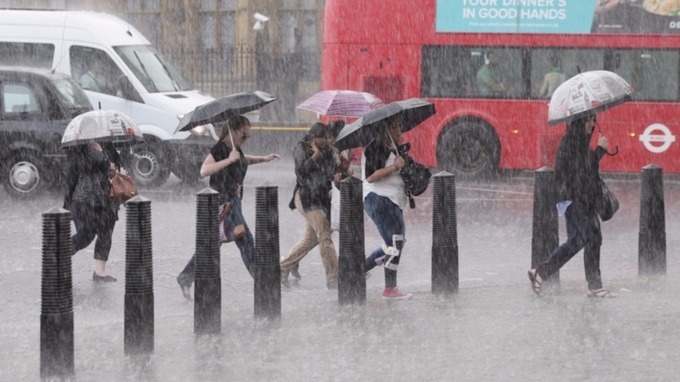
    UK Proper = actual, real. “This is a proper rain, not a mere sprinkle.” The burgers
    served at UK restaurant chain Proper Burgers don’t come with tiny top hats, they’re merely claiming to be the real deal, not like the greasy floppy discs you get at McDonald’s.
    U.S.  Fancy – adjective. “You look so fancy in that frilly lace dress.”
    UK  Fancy – verb. “Fancy a walk? Fancy a cuppa?” I’m a big fan of the UK’s definition of fancy. Not only is it efficient, it sounds better than, Do you wanna…? I suggest Americans embrace this usage immediately.


  5.  xxx. At first the tiny x’s that appeared at the end of texts or emails from British friends left me confused. Could those really be kisses? Like the kind five-year-old Americans reserve for Mommy’s Valentine’s Day card? Yep. How sweet is that? It’s customary (and automatic) for women to include one, two, or three kisses at the end of correspondences. Maybe the number of x’s mean something (I haven’t seen more than xxx), I’m not sure yet. At any rate, I’ve implemented this charming little practice with a few American friends, although as typical excessive Americans, we’ve gone overboard:
    Rachel xxxxxxxxxxxxxxxxxxxxxxxxxxxxx


  6.  The weather. The English can talk for decades about the weather. With good reason. The weather here can be as erratic as a cat on crack. You know that scene in Mary Poppins where one minute the wind carries away all the nannies and the next minute the sun bursts through the clouds? Yeah, that’s accurate. I kid you not, one day it was sunny in my back garden and raining in the front. But talking about the weather comes with hidden depths apparently, as a friend explained. Taking to someone about the weather is a social test of sorts, an invitation for potential connection. When you bring up the weather you are, in essence, saying to the other person do you accept me? Therefore, you’re always supposed to agree. It’s like opening the door for a guest and saying, come in and know me better. Wish I would have known that.
    Stranger, to me, trying to be nice: What a ghastly day! It’s so terribly cold today, isn’t it?
    What I should have said: Yes, simply horrid! Hopefully tomorrow will be better.
    What I – being both too literal and from Wisconsin – actually said: Oh today’s not so bad. Where I’m from this is nothing!
    Whoops. Sorry person at the bus stop. Sorry for trampling on the olive branch of friendship you were tentatively holding out to me.
    This ceremony underscores a greater difference: Americans default to talking about themselves, their experiences/opinions/feelings (“I had the best hamburger there” “I hated that movie”) whereas the English readily talk about information and, at least initially, steer away from themselves. (“That pub was established in 1663” “According to The Sun that movie lost over 1 million pounds”) Both groups certainly know how to operate outside out of their cultural comfort zone, but we generally and often unknowingly default to it.
    stream_img
  7.  Public Transportation may take over your life. Or at least your day. Like the weather, we’re all at its mercy. When public transport (buses/tubes/trains/trams) operates as it should, London is the best city ever. But when it turns fickle and you find yourself in a downpour waiting for the 163 bus that, unbeknownst to you, went on strike, or you’ve already tapped in but missed your train by a nanosecond and the next one’s not due for thirty minutes, or when you’re in Paddington Station and have to trek your weary self from the Bakerloo line to Hammersmith and City, London is drained of all its charms. Not all Tube lines (or busses) are created equal and you learn to play favorites. The Northern line screams at you like a banshee, the Victoria line, while endearing, is a bazillion degrees all the time, (Fahrenheit or Celsius, take your pick) and the Piccadilly line holds too many tourists and their too big suitcases. (Which, yes, is me at times). Give me the roomy, air-conditioned District line with its rooftop views any day.
    Frustrations notwithstanding, London’s transportation system is a marvel, a cosmopolitan beast that induces respect, a little fear, and frequent jolts of exhilaration. Descend to the bowels of the city and partake in the magnificent maze that makes up London’s underground (192 feet at its deepest point!) but for the love of life, stand on the right!
    stand-on-the-right-sign-london-underground
  8.  Laughing, smiling, and Customer service.  Americans, don’t leave a nasty TripAdvisor review if your London waiter fails to smile. Unknowingly, Americans often have high expectations for customer service, because the good ol’ U.S. of A does customer service really well. The rest of the world, however, might not match what you’ve come to believe as “standard service”. Sometimes you pay for the toilet. You have to ask for water, and sometimes you end up paying for that, too. The customer is not always right. People visit America to experience these indulgences. (I once asked an English teenager what she thought of her first trip to America and her first response was, the toilets are huge!) If you keep smiling at your server, chances are you’ll get a smile in return. But don’t expect it. The rest of the world just doesn’t think smiling is as normal as we do.
    Americans are trained to give feedback. From the tiniest of babies, we’re taught to flash our “big toothy American grins” as one British friend put it. We laugh more than the rest of the world, too. When something’s funny, or when it’s not. If we’re feeling uncomfortable, or if the room is too quiet. (We don’t do well with long silences.) And if we’re sarcastic and joking, we often actually say the words, “I’m joking!”
    The Brits, and probably the rest of Europe? Not so much. I’m not saying they don’t laugh and smile, it’s just not a cultural pastime. They’ll take the mick out of you, they just never tell you it’s happening, so you might not know. My advice? Just laugh regardless. It is the American way.
    (To be fair, the English seem to do a better job of serving one another inside the home. In the States, it’s a sign of friendship if I tell you to rummage through my fridge and get the milk yourself whereas here, a good friend would make and serve you a cuppa just how you like it.)


  9.  Instruction & Process. The English person’s appreciation for following a tried and true process is best expressed by examples of my observations:
    On the bus, one high school student to another: “You ought to eat more fruit while you’re revising (aka studying) and be sure to go to bed early.
    A friend to my husband: “You ought to be wearing a scarf; it’s cold outside.”
    At the park, a dad training his son who was training the dog: “No, stand here, right here, speak firmer, and maintain eye contact.”
    At church, the minister to the congregation at a candlelit service (my favorite) : “In the event of a fire, please remain calmly in your seats and someone will give you instructions on how to exit.”
    Following the proper process leads to well-trained dogs (they put American dogs to shame), order and calmness during a fire and, another thing I’ve noticed, children who are promptly tucked into bed at seven pm. The fact that I’ve even noticed these, and other, instructional statements showcase that things are different here than in the States. Generally speaking, Americans don’t like to be told what to do and don’t relish telling others what to do. The positive side? Lots of freedom and generosity in individuality. Entrepreneurship, exploration, and innovation. But we might get the teeniest bit defensive if we sense someone might be encroaching upon our “right” to do things our way. Which is why I was fascinated when a dinner guest (originally from mainland Europe) asked, “What does it mean when Americans say, It’s none of your business?” What does it mean? It means we love our freedom, thinking outside the box, exploring possibilities. And we sometimes, sadly, forget that we’re accountable to society on a whole. Sometimes we aren’t as respectful to authority as we should be. (And the fact that I’m comparing the U.S. to the UK, an independent, western civilization, only further highlights America’s strong independent streak.)


  10. Words. When it comes to vocabulary, the English have a large, vibrant arsenal.
    Coming from America, where we tend to recycle a handful of adjectives (Awesome! Cool! Great!) and overuse superlatives (“We had the best time!”), I find this both inspiring and intimidating. Even kids throw around words like conundrum and repugnant. (Don’t get me wrong, you’ll hear your fill of four-letter words as well.) Such meticulous attention to words is mostly exhilarating, yet sometimes exhausting. I once heard a lady correct her young (maybe four-year-old?) traveling companion that people weren’t merely getting off the train, but that passengers were alighting. When my teenage daughter asked a stranger if she could please tell her how to get to Wimbledon, the woman responded with, “I could” and waited for the proper execution of would. Sometimes fifty words are used when ten would have sufficed.

In closing, I’ll let two literary giants, British writer Charles Dickens and American writer John Steinbeck demonstrate this difference in their own words:

“In the year 1775, there stood upon the borders of Epping Forest, at a distance of about twelve miles from London–measuring from the Standard in Cornhill,’ or rather from the spot on or near to which the Standard used to be in days of yore–a house of public entertainment called the Maypole; which fact was demonstrated to all such travelers as could neither read nor write (and at that time a vast number both of travelers and stay-at-homes were in this condition) by the emblem reared on the roadside over against the house, which, if not of those goodly proportions that Maypoles were wont to present in olden times, was a fair young ash, thirty feet in height, and straight as any arrow that ever English yeoman drew.”

Charles Dickens, Barnaby Rudge

 “There ain’t no sin and there ain’t no virtue. There’s just stuff people do.”
John Steinbeck, The Grapes of Wrath

books-1481403_640


Child of Weakness

If I could take on a superpower it would be not to need sleep. I like sleep, yet it doesn’t seem to fancy me, especially this past week as jet leg kicks our butts something fierce. Insomnia, no matter the reason, forces us to face the reality of our human weakness. Even when we desperately desire and need sleep, when we’ve tried all the tricks in the book minus hard narcotics, we lack the power to make ourselves fall asleep. (Blessed are those who are the exception.) What’s more, try as we might with coffee in hand, we can’t decide we don’t need sleep.

Our reliance on sleep is one small reminder that God is not like us. God does not sleep. (Psalm 121:4) Which is why I find it so comforting, especially in those near-to-tears bleary moments in the day after a sleepless night, to read that Jesus did sleep. Jesus did get tired (John 4:6). Jesus slept in the back of the boat as the wind, and disciples, howled. (Mark 4:37-39) Self-sufficient God took on human flesh in Jesus and experienced needing sleep and can empathize with our human weaknesses. (Hebrews 4:15) That is a high priest who cares, who understands, who gets it, who gets us.

As an American living in London, one of the cultural differences I’m gradually realizing is this: Generally speaking, Americans talk about their weaknesses more readily than, well, maybe the rest of the world. Both sides of the spectrum – talking too much about your weakness and never talking about your weaknesses – are dangerous. It’d be exhausting to hang out with someone who is a hot mess (a phrase I haven’t heard since moving here) all of the time. But on the flip side, you can’t have a real friendship with someone who never shares their weaknesses and struggles. One side can lead to self-absorption and habitual complaining, the other denial and isolation.

When I was asked yesterday at church how I was doing I answered like the American Gen X-er that I am: “Jet lagged and sleep-deprived!” And I was glad for the ‘I’m sorry’s’ and ‘I’ve been there too.’ I’m glad no one spouted off a Bible verse. Empathy is what we’re really after, to cash in on the common bond of humanity we share, no matter what (or if) we profess about God.

Paul takes it a step further. Paul boasts in his weaknesses so that God’s strength can shine through. I am glad to boast about my weaknesses so that the power of Christ can work through me. (2 Cor. 12:9)

Do I tether my weaknesses to God’s strength, or do I merely whine?

Both. And I’d like to decrease the latter.

Here’s what I’m thinking. We are called to bear with one another and help the weak, to be patient and forgiving. And that’s what we’re hoping for when we share a weakness: understanding and acceptance, not a sermon. But if we’re the weakness sharer we can link it to God’s power at work in our lives. That’s where the boasting comes in, showcasing what God is doing through our weaknesses. It’s admitting that we struggle with anxiety and rejoicing in the ways he empowers us to socially connect with others anyway. It’s sharing our struggle with anger and sharing how meditating on God’s word has taught us to give pause. It’s recognizing our tiredness and sleep deprivation while giving God credit and praise for giving us the strength to work and parent and live. It’s accepting we are children of weakness, empowered by a righteous and loving Father.

Superheroes we’re not, nor are we meant to be. And yet, through Christ, his power is at work in us.

For God is working in you, giving you the desire and the power to do what pleases him. (Phil 2:13 NLT)

boy-child-clouds-kid-346796