Walk With Me

The other week I took a long walk with a new friend. From our southwest London neighborhood, we walked through the commons to Richmond Park where – oh the blessed history of it all – King Henry the 8th used to hunt deer. Six miles on foot, lunch by the Thames, and a bus ride home on a double decker. Pure loveliness.

Walking with someone carries certain, yet unspoken, expectations: you’ll travel in the same direction, often side by side. You’ll talk. You won’t pop in your ear buds or take a prolonged phone call. The walk is the means by which you spend time together. Specific destinations and step goals might be part of it, but those targets are attainable all by your lonesome. Walking with someone implies companionship and communication. You’re in this together.

fullsizeoutput_4e55

I’ve been reading in Genesis, the first book of the Old Testament, and the repeated phrase walked with God has caught my attention:

Noah walked with God. (Gen. 6)

Enoch walked with God. (Gen. 5:24)

Abraham and Isaac walked with God. (Gen. 48:15)

walk /wɔːk/ verb

  1. move at a regular pace by lifting and setting down each foot in turn, never having both feet off the ground at once.

While it’s unlikely that the forefathers of our faith took literal walks with God, their lives aligned with God and his precepts, so much so that their relationship with God took on the qualities that characterize a person to person, side by side walk: listening and speaking. Steadfastness. Not a mad dash nor stagnancy, but steady forward motion. One can expect stumbling, tedium, steep ascent, and uneven ground, in both physical and spiritual walks, but on you walk, one foot in front of the other.

Ever been walking with someone and a disagreement ensues? (Think family vacation.) An argument flares between you and your spouse or you and your child and all of a sudden you’re at odds and the last thing you want to do is walk next to that person.

In fact, it feels impossible to walk beside that person. So one of you barrels ahead, or stops and refuses to budge, or turns around and stomps off in the opposite direction, or crosses the road. Even if you are able to carry on side by side, something has changed. There’s a space between you now and it’s uncomfortable. Communication shuts down. Something ugly has gotten in the way of your walk.

Sin.

Sin gets in the way, interrupting pleasant physical walks with one another and interrupting our walk with God. Sin, our natural, rebellious I want to go my own way spirit, prevents us from walking with God in the first place.

In conjunction with reading the first book of the Old Testament, I’ve also been reading the first book of the New Testament, Matthew, and I’ve noticed this repeated phrase (“him” referring to Jesus):

Great crowds followed him. (Matt. 4:25)

Great crowds followed him. (Matt. 8:1)

Great crowds followed him. ( Matt. 20:29)

The phrase is stamped all over the gospels. The crowds followed Jesus like children follow a street performer. What’s he going to do next?  With a word, withered skin healed. Defective legs walked. Who wouldn’t want to witness that? Who wouldn’t clap and cheer? Of course the crowds followed him, if only for the endorphin rush.

But crowds can be fickle. Crowds can quickly turn into mobs. The green with envy religious leaders knew this and worked it to their advantage by persuading the crowd to crucify Jesus, the very man they’d been scrambling to watch heal the sick, instead of Barabbas, the murderer. (Matt. 27:20)

It’s easier to remain in the crowd than to step out on your own.

Even now, it’s easier to appear to follow Jesus, to step into church on a Sunday (as we should) than depend on him Monday through Saturday. Jesus put up with the crowds; he was interested in the person. He wasn’t pursuing popularity, he was after the heart.  Jesus called, and continues to call, individuals to step out of the crowd, take up their cross, and walk with him. Men and women, young and old. For many, this invitation felt a little too personal, a little too crazy, and cost way too much. Following as a groupie was one thing. Walking with him was another. Jesus knew this and warned his crowd, “Enter through the narrow gate. For wide is the gate and broad is the road that leads to destruction, and many enter through it.  But small is the gate and narrow the road that leads to life, and only a few find it.” (Matt. 7:13-14)

It’s small and narrow and few will find it but guess what? If you seek him, you will find him. If you knock, he’ll let you in. The good news is that Jesus himself is the gate, his death and resurrection opened the way for us to walk with God. The good news is he wants to lead us by the right hand, to give us an unshakeable hope and a secure heavenly home. He wants us to align ourselves, our lives, our steps with his word, which serves as a lamp to show us how and where to walk. (Psalm 119:105)

What is your reality? Do you view Jesus from the crowd, or do you walk with him day by day? Has your walk with him been interrupted by sin? Would you like to step out of the crowd and begin walking with him?

Wherever you find yourself, call out to him. If we confess our sins, he is faithful and just and will forgive us our sins and purify us from all unrighteousness.  (1John 1:9)

And what does the Lord require of you? To act justly and to love mercy and to walk humbly with your God. (Micah 6:8)

Give Weeds a Chance

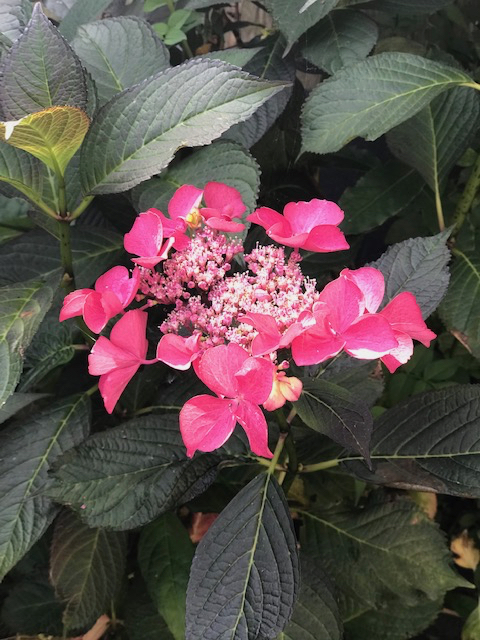
My garden weeds were actually flowers. I just didn’t know it a few months back. I almost pulled those gangly eyesores. But the pink roses that bloomed unexpectedly in my own back garden, without any help from me, prompted me to take a wait and see approach. After all, I had limited horticultural knowledge in the States; I was even more clueless here in the strange and bipolar climate that is London. So I left those weeds alone, let them get good and ugly.

Then a peculiar thing began to happen. They bloomed. They turned into this:

IMG_0637

And this:

IMG_0413

Even the vine arching our front door produced these masterpieces, as intricate as spiders, but the kind of spiders you want hanging from your front door.

IMG_0429

What loveliness to burst forth from such perceived ugliness! And to think I could have missed it. With the best of intentions, I could have destroyed my beautiful back garden with my own two hands. My impulse to yank and uproot was only to make things better. Deal with the problem. Take care of the mess. A natural response, similar to the impulse to jump in and eradicate any messy, any painful, any unpleasant thing that crops up in life.

Sometimes this is right. There are weeds in this world (both literally and figuratively) that won’t bloom into flowers. They’ll take over. Your garden. Your life. Weeds like greed and lust, bitterness and pride. Small weeds like: just a quick peek at that site. Just a little fudging of the numbers. Just a dinner with that person who isn’t my spouse. Sin doesn’t deserve a wait and see approach. Pluck that sucker out before it’s too late.

But that’s not what I’m talking about. I’m talking about another variety of weeds, the agitations that creep up not because of our sin and poor choices, but simply because we walk the earth. Difficult circumstances, or relationships, or inadequacies – ours and others – that frighten, exhaust, or grieve us. Common weeds – like sickness, suffering, loss, and disillusionment – that interfere with our vision of how we think life ought to look. Or hidden weeds like loneliness, anxiety and regret.

What, besides tears and frustrated sighs, could come from such yuck? Why would we ever take a wait and see approach and be okay with those weeds? Why shouldn’t we confront that contentious co-worker face to face? Punish that unruly child?  End the crumbling marriage? Why would we take a wait and see approach with our feelings of disappointment, depression or humiliation?

We want those weeds out. We want out.

But the truth is, God gives the weeds.

When times are good, be happy; but when times are bad, consider this: God has made the one as well as the other. (Ecclesiastes 7:14)

And the other truth is, the bad times might bear good.

You intended to harm me, but God intended it all for good.  – Joseph (Gen. 50:20)

And draw us closer to the Lord Almighty.

The Lord is near to those who are discouraged; he saves those who have lost all hope. (Psalm 34:18)

Equip us to help others.

…so that we can comfort those in any trouble with the comfort we ourselves receive from God. (2 Cor. 1:4)

Wake us up spiritually.

It was good for me to be afflicted so that I might learn your decrees. (Ps. 119:17)

Grow our character.

…we also glory in our sufferings, because we know that suffering produces perseverance; perseverance, character; and character, hope. (Rom. 5:3-4)

Bring us to the end of ourselves so we can find our joy in him.

…do not be surprised at the fiery ordeal that has come on you to test you, as though something strange were happening to you. But rejoice inasmuch as you participate in the sufferings of Christ, so that you may be overjoyed when his glory is revealed. (1 Peter 4:12-13

I didn’t recognize the plants in my garden so had no way of knowing what, if anything, would bloom. We don’t always comprehend the hard things in our lives, but if God can make dry bones come alive, (Ezekiel 37) he can bring good from my dark times and yours.

This isn’t about denial, ignoring the problem with a delusional “All will be fine!” Waiting and seeing what the Lord may do is recognizing we’re not fully aware of what goes on under the surface.

So we wait

and pray

and watch

and grow.

Give the weeds a chance to produce something good. Maybe not easy, maybe not even nice, but good. Perseverance. Empathy. Perspective. Contentment.

A blossom that takes you by surprise.

An outcome you never would have expected.

Wait and see.

IMG_9932

Just an American in England on the 4th of July

4th of July, 2019.

It’s strange to be here in lovely London. Today will not include fireworks or sparklers or hotdogs or star-shaped, red Jell-O jigglers or parades or flags waving or freedom from school. It will include watermelon and corn on the cob corn salad and celebrating with American friends. It’s just past eight in the morning and the hubs and I have already sung along to Proud to be an American and John Mellencamps’s Pink Houses (aka Ain’t that America). Undoubtedly the words Oh say can you see will escape my lips at some point today; it can’t be helped. And once you start in on that bravado you have to finish and finish big, high notes and all. I’ll do my best to refrain on the tube.

But the lyrics from My Country Tis of Thee (aka America) were running through my mind when I woke up. Since the tune is borrowed from England’s national anthem, I felt compelled to take a closer look at both songs:

God save our gracious Queen,
Long live our noble Queen,
God save the Queen!
Send her victorious,
Happy and glorious,
Long to reign over us,
God save the Queen!

In 1831, American Samuel Francis Smith took that melody and penned these words:

My country tis of thee,
Sweet land of liberty,
Of thee I sing.
Land where my fathers died!
Land of the Pilgrim’s pride!
From every mountain side,
Let freedom ring!

It was a hit, resonating so profoundly with fellow Americans that the song became the unofficial National Anthem. (Although the words to The Star-Spangled Banner were penned in 1814, it wasn’t set to music, and thereby becoming America’s national anthem, until 1931.)

Was twenty-four-year-old seminary student Mr. Smith trying to be snarky? Stick it to Britain, more than fifty years after fighting a bloody war for independence? I don’t think so. Borrowing tunes was common enough (In fact the original melody is believed by some to hail from Germany). Yet you can’t help noting some differences.

Take England’s national anthem. Did you notice how many times Queen is mentioned? Four. Five if you count the pronoun her. She’s the star of the song, the theme of the prayer. And speaking of pronouns, they’re all our and us, not a single me or I. We want her (our glorious queen) to reign over us. Together. Collectively. As it should be. We’re unanimous in that.

The pronouns in America’s version speak of stark independence, I and me. It’s a celebration of my personal freedom, while paying homage to those who fought it for me. The theme of the song is freedom, and the thankfulness that stirs in me. (Mr. Smith does lead the song to communal-ness in the fourth and final verse with lines such as Protect us by Thy might, Great God, our King. It’s really quite beautiful.)

These nuances not only allude to the political differences between a monarchy and a republic, but also point to cultural differences in mindset, in how we, often unknowingly, operate in the world. Do we view individual freedom or collective unanimity as top priority? Do we make a display of our patriotic love of country or do we adopt a quieter approach? Are we encouraged or uncomfortable talking about self and personal emotions?

I’m not trying to completely Freud this up. I’m just an American living in England on the Fourth of July, letting my thoughts wander and taking you with me.

I do attest that all of these culture distinctions aren’t a good/bad, right/wrong kind of thing. I don’t think one group loves their country more than another. We might show our affection differently, and we also might fall into the danger of making snap assessments:

You can see how Americans might view brits as stoic.

You can see how Brits might view Americans as overly excited.

And you can see how both of these traits might be a little bit true.

Culture is built into us from birth, with such subtlety and steadfastness we are usually unaware of the role it plays until said culture is challenged. Until we find ourselves on foreign soil on the fourth of July and realize no one else is waving thier American flag. (Don’t worry. I’m not.)

For whatever it’s worth, wherever you are, Happy 4th!

IMG_0733

What Remains

IMG_E9516
Notre Dame de Paris • 13 April, 2019

If you would have told the me in this picture, the me of 4 days ago, that Notre Dame would go up in flames, I wouldn’t have believed you. Having walked the city for thirteen miles the previous day, we were tired, on the last leg of our 36-hour jaunt in the city before returning to our friends’ house on the outskirts of Paris. “You at least have to see Notre Dame,” I told my fourteen-year-old. “You can’t go to Paris and not see Notre Dame.”

Three days later, back in London, watching the cathedral engulfed in flame on BBC News, I wondered if this statement would be tragically and irrevocably altered: Would anything of Notre Dame remain to be seen? It’s a tragic blow to the heart of a passionate city. A huge loss.

Nothing lasts. What was considered fixed, sure, unmovable, no longer is. It’s not the first time we’ve been shocked by such unexpected and sudden destruction: Twin Towers. Grenfell Tower. Countless buildings, homes, historical artifacts lost to wars all over the world. Sadly, it won’t be the last.

Last.

Nothing lasts.

Well, not nothing. Almost nothing.

Two things. That’s it. Two earthly things will remain: the Word of God, and people.

Last night, as we watched Notre Dame burn, we received news that friends of friends were killed in a car accident while on holiday.

Last night, as we watched Notre Dame burn, we heard from friends whose child is suffering severely yet doctors can give no answers, no relief.

These tragedies, this kind of human suffering, and countless others, force us to prioritize the loss of Notre Dame. Not erase the loss, not let it go un-mourned, prioritize it. God did not become flesh, die, and rise again to save buildings or animals or nature or the planet; he came to save people. We are the prize of his creation, we are imprinted with his image. Human loss is a tragedy. like no other. Jesus wept at the death of Lazarus, he wept moments before he raised him back to life.

We humans are born rebels, beloved, and in his image. We are granted the freedom and ability to do awful things and beautiful things. We are implored to seek the Lord while he may be found and call on him while he is near. We are able to imagine and create things like great cathedrals that point to someone higher, someone greater, someone who always was and will always be.

I am the Alpha and the Omega—the beginning and the end,” says the Lord God. “I am the one who is, who always was, and who is still to come—the Almighty One. (Revelation 1:8)

But the Word of the Lord remains forever. (1 Peter 1:25)

The world and its desires pass away, but whoever does the will of God lives forever. (1 John 2:17)

And they will go away into eternal punishment, but the righteous will go into eternal life. (Matthew 25:46)

dust returns to the ground it came from, and the spirit returns to God who gave it. (Ecclesiastes 12:7)

Seek the LORD while he may be found; call on him while he is near. (Isaiah 55:6) 


Learning London

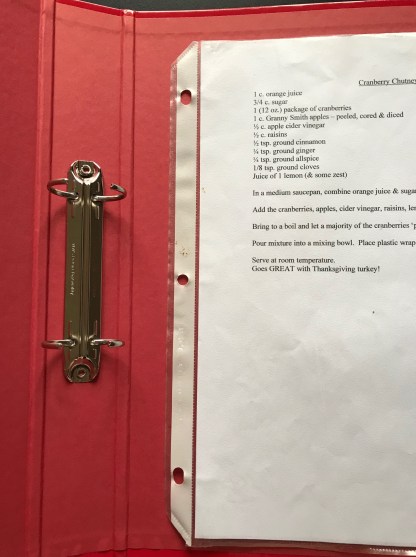
I never expected to mourn the loss of a three-ring-binder, but I have. Thinking I was smart to save on room/weight when we moved overseas, and assuming I could easily buy a three ring binder once in London, I packed my plastic sleeve encased recipes without the binder, only to find that three ring binders don’t exist here in the UK, only two ring binders.

IMG_8404A two ring binders seems close to a three ring binder, but it doesn’t work with my recipes. Close, but functionally different.

The US and the UK may seem culturally similar, and in some ways we are, but our (mostly) common language can blind us to the many, often unexpected, differences. So before what seems foreign becomes normal, I thought I’d jot down a few of my general,  (does not define everybody) non-scientific  (I could be way off) initial (I’m a newbie – grace please) observations of some of the differences (not right and wrong) between two countries I love.

Of course the quick ones, the differences most everybody knows, include: left side of the road not right, metric not standard, Celsius not Fahrenheit, pound not dollar. Other distinctions include: French press not drip coffee, hang across the radiator not tumble dry, 220 volts not 110. My ear has just started to tune itself to various British (and other) accents, my feet are finally learning how to walk in a crowded station without “dancing” with somebody every five minutes, and my brain is beginning to grasp the definitions of words and phrases I think I should know: boot= the car trunk, fringe = bangs, you don’t say “come in” you say “come through” and when offered pudding expect any kind of dessert except for actual pudding  (‘cuz that doesn’t exist here either). Even though most puddings here lack the sugar punch American desserts deliver (hooray!) they are a.ma.zing. Except for black pudding. That’s just wrong really different. Do not mistake it for chocolate pudding.

Sizes: In addition to binders we’ve also discovered that our US computer paper doesn’t fit our UK printer that we were required to buy since the US printer plug doesn’t fit our UK outlets. Also, school notebooks come in a different size (A4) as do shoes, clothing, mattresses, paper towels, beverages, food products, gardens (yards), houses, cars… It’s safe to say most everything is smaller here.

Silverware Cutlery. As soon as we pick up our fork we announce our nationality. I try to hold my fork the British way (left hand and upside down by American standards) while using my knife to assemble each bite because it does look so much nicer, but I usually  give up and clutch my fork like a Neanderthal.

Signs. Pedestrians beware: stop signs are nonexistent and you do not have the right of way (unless you’re in a Zebra. Google it.) Streets signs are not where Americans would expect to find them either.

Shopping. Whereas America is known for superstores, London communities boast high streets. When we first moved, when all I wanted was one familiar store where I could get the basics to set up a house, I mourned the convenience of Copps/Walmart/Kohls/Target. But I have come to appreciate London’s smaller, more individualized stores. I like getting bread from the Sicilian baker and hearing bits of his life story; I like that we had a key cut at the tiny shop by the station, a shop that only cuts keys and cobbles shoes.

img_8916.jpg

If you have one job to do, you’ll probably do it right, right? You can manage to find large, chain stores here inLondon, but the selection is significantly smaller than what we Americans have come to expect.

Some quick differences on Food:

  • Eggs are on the shelf, never refrigerated, and it took me forever to find them.
  • Produce has a much shorter shelf life. Many preservatives/additives used in the States are outlawed in the UK, so even hearty veggies like potatoes and carrots will only last about a week. (Thankfully, my GI system is much happier here in Europe! More on this in a future blogpost.)
  • The packaging and labels are all different. This shouldn’t come as a surprise, but I didn’t realize how dependent I am on them. How can I find the baking bicarbonate of soda if it doesn’t come in an orange box? Or the chocolate chips if they come in these minuscule packages? We don’t know what we consider familiar until the familiar is taken away.

img_8914-1.jpg


Getting around. It’s true that many families in London own a car, but we don’t, so this has been an adjustment. Every now and then I miss driving a car by myself with the radio on, but all in all we’re finding that walking (so much more walking!) and busses/tubes/trains/ & trams do the job quite well. Sure, it can take an hour to transport yourself five miles, but this is city of 8.7 million people after all. Sometimes I rather like public transportation. Not during rush hour of course, or when it’s raining. Or when you realize you’re on the right train but headed in the wrong direction. Or when there’s engineering work, or a strike, or the bus is running late, or when you’re running late, or when your Oyster cards flashes red when you tap in (Google it). But when the sun is shining and everything is working just as it should be… public transportation is the best!

IMG_0204
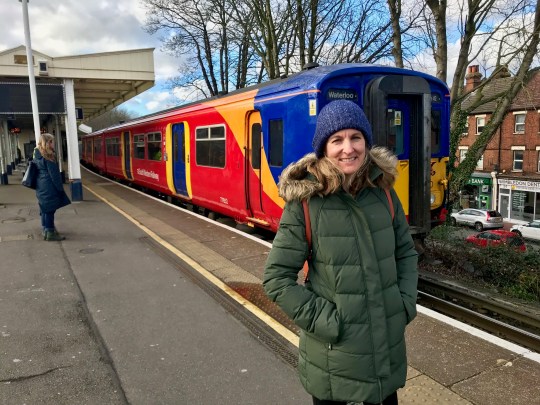
Catching the train to Waterloo at our closest station

Public Bathrooms Toilets & Drinking Fountains: Good luck finding them. You may come across a public toilet from time to time, but chances are you’ll also end up buying a coffee in exchange for the privileging of using the toilet. Drinking fountains are even harder to come by, which is strange for an American. You would have thought the one I spotted at the British Library on the 1st floor (which is actually considered the 2nd floor in America) was part of an exhibit. “Whoa, look at that! A DRINKING fountain!” For whatever reason, Americans do public bathrooms and drinking fountains reeeeally well.

School. Honestly, I don’t have the emotional energy to hash out all the differences . Yes, students wear uniforms and many, including my daughter, have a proper commute, but those are by far the easiest differences to understand. A levels, GCSE’s, Sixth form… and a schedule that rotates every two weeks. Exams are EVERYTHING, but my daughter often enjoys a pain au chocolat on her twenty minute break which is in addition to her 40 minute lunch break. Maybe it’s a fair tradeoff to teachers publicly announcing test scores and grades. (Americans, can you imagine the outcry?)

 People. No doubt this is the hardest difference to pin down. We’re all so nuanced, so unique, products of our mood, circumstances, families… and a host of other things. And in many, many ways, we are alike. But since this is a post about differences, GENERALLY speaking, here are some of my observations:

  • Brits seem to be quieter than Americans, value pauses in conversation, calmness, thinking before speaking, and are more guarded about offering personal feelings and stories. Americans tend to laugh more frequently and louder, value fun, use more hand gestures and body language, and share the personal nitty-gritty more readily.
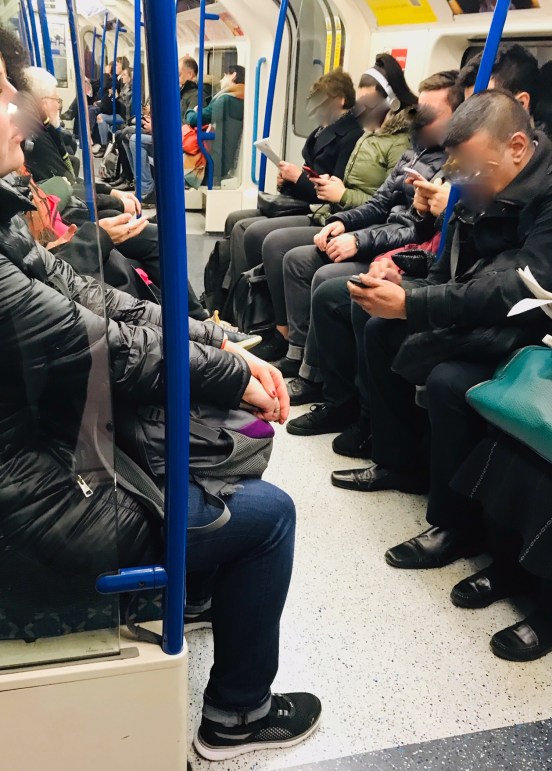
  • In London it’s typically inappropriate to make eye contact, smile, or nod to strangers. The more crowded public transport gets, the quieter it gets (unless a soccer football game has just let out. Then you can expect a drunken serenade). Riding the tube during rush hour is like being at the library, except you’re standing shoulder to shoulder and nose in armpit and there aren’t any books. Unless you’ve brought your own. But if you need help, ask for it (like I did on the tram this morning). Be polite and apologetic: “Excuse me Sir, I’m so sorry, but could you tell me…” Once you politely break through the invisible walls that seem to encase everyone around you, and apologize for doing so, Brits are very happy to help.


IMG_0216
Everyone in their own personal zone on the Piccadilly line, NOT during rush hour.


  • Americans tend to embody the “do it your way” and “do it yourself” mentality. If we don’t like how things are done, we’re quick to find a new solution, and we’re pretty flexible in letting people do things in their own, individual way. The mentality behind phrases like “Works for me” and “No big deal” now strike me as very American. Brits as a whole, seem to value uniformity and the proper process of “how something should be done”, and can be quite explicit in their directions on the how. You can see how these two mentalities might clash, like when I was filling out my daughter’s paperwork to enroll her for school. I was trying to respect the queue behind me (messing up the queue is almost a daily occurrence for me. Someday I’ll get it right…) by writing quickly. I didn’t think I was rushing, but the worker at the desk instructed me to “slow down and take my time because this is important”. I felt scolded. She probably thought I was being careless. But in truth we were both trying to be helpful. She valued that I do it carefully, the proper way, while I thought everyone would appreciate if I did it efficiently. Brits tend to be very instructive while Americans might bristle at being told what to do. Insert grace.

Parenting. (Again, these are total generalities and merely my impressions) American parents seem to value instilling independence and freedom in their children with a “they’ll learn to figure it out on their own”. Children seem to hold hands with parents longer here (past the age of seven or eight) and teens often stay at the dinner table to talk politics. While on the bus I have observed a sweet, quiet, very intentional and educational, eye to eye interaction between parents and their children. Yes, Americans have sweet interactions with their small children, but I’ve noticed something different about it here.

Cultural Diversity. Had we moved from New York instead of central Wisconsin, this difference wouldn’t seem so pronounced. But it’s one of the things we’re finding we love about London – a city that speaks over 300 languages. Such diversity comes with yummy perks – there are over a dozen Indian restaurants, just within walking distance of our house! At school, our daughter interacts with students and staff from Venezuela, Senegal, France, Portugal, Australia, Ireland, Brazil, Poland, Spain, South Africa, Japan, Germany, India, Hungary, Korea… and the list goes on.

So we’re certainly not alone in our cultural adjustment here in London. Whether you’re reading this as one of my “old” American friends or one of my new British friends, in all the ways that really matter, people are people, even if binders are not.

Treasure Up

With the hoopla over and done with, Christmas odds and ends now line store shelves bearing garish clearance priced stickers, just as Christmas leftovers line our refrigerator. (Is anyone going to eat the rest of this turkey? Please?) Carol singing and candle-lit services give way to the cold reality of January and our mentality shifts from the magic of it all to monotony:
back to work and school,
back to trudging through snow
and waiting for busses
and paying credit card bills…
and cleaning out the fridge.
The advent book we started but failed to finish sits on the coffee table like a half done To Do List. (I can’t read it now.) So we’ll pack it up and try for next year, just as we’ll pack up Christmas and bring it out months from now- when the Christmas baby of 2018 would be a mere 11 months old.

Still very much a baby. Still to be celebrated.

The truth is any parent, any person, knows that birth is the beginning, the mere title page, of a life unfolding. Yes the season has come to an end, but our pondering shouldn’t. Scripture records three of Mary’s ponderings:
She wondered at the words of the angel before she conceived.
She treasured in her heart the strange visitors and strange events after giving birth.
She pondered when her baby, now twelve, stayed to converse in the Jerusalem Temple rather than follow her and Joseph home. (Luke 1:29, Luke 2:19, Luke 2:51).
Who’s to say there weren’t a hundred other times Mary pondered?

I think there were. I take Mary as someone who pondered throughout life, someone who practiced contemplating, reflecting, treasuring in her heart the confusing and joyful and heartbreaking moments of life.

Do you trust God? Then allow yourself to ponder because the two are strongly linked. Pondering is not fixing, reasoning, or bargaining. Pondering is noticing what God has done and is doing and pausing to absorb and privately rejoice in his glory, even when we can’t make sense of it, even when His Glory doesn’t match up with What I Want. Life isn’t a snow globe; we can’t hold our world, shake it and shake it knowing the storm will settle and the pretty center scene will clear again right before our eyes.

Sometimes the storm doesn’t settle.
Sometimes clarity doesn’t return.
So we’re left to trust, to ponder, to treasure in our hearts.

Ponder holds hands with prayer.
Ponder bids us not to rush past, rush through, rush into but to

s    l    o    w          d   o    w   n

so we might treasure up

who God is, what he’s done, what he’s promised to do. Even when we’re not feeling it. Even when tempest blurs our little world. Even in the thick of January.
For where your treasure is, there will your heart be also. – Matt. 6:21


Treasure Up

Moments, memories, money
Treasure up.
That which gives you hope
or joy
or fear
Treasure up.

The unexplainable, unexpected, undeniable
In your heart
Treasure up.

Treasure up, treasure up,
treasure up up up

To find your heart
to find your self
to find your peace
to find your God
To dim your sight of the here and now.

Treasure up
treasure up
treasure
up
up
up.

-Rachel Allord

IMG_E8237
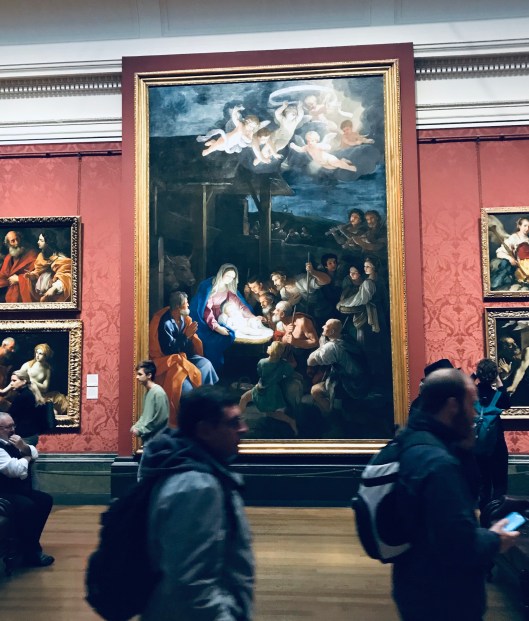
Guido Reni, ‘Adoration of the shepherds’1640 National Art Gallery, London


A Pilgrim in Progress

Since the world outside of the U.S. doesn’t celebrate Thanksgiving, here in London this past Thursday was, in many ways just another ordinary day. Except that it wasn’t. It was Thanksgiving, my favorite holiday.

So Doug and I traveled into the city on a jammed packed rush hour train to attend “Thanksgiving Day Service for the American Community in London” at St. Paul’s Cathedral. It was grand and gorgeous. We sang Come Ye Thankful People Come and America the Beautiful (sniffle, sniffle) accompanied by a thousand other Americans living in the UK, and a hearty pipe organ. Yet if I could have blinked and transported across the ocean, to my son, to family, to the comfortable familiar, I would have. Ironically, the pilgrims felt more tangible than any other year, and in a teensy way I related to some of their plight: I longed for home, for family an ocean apart. I yearned for the familiar that was left behind.After the service, the woman originally from Delaware sitting next to us with whom we’d been chatting said, “Enjoy becoming in-betweeners”.  She knew what she was talking about it, living in London these past thirty years. She knew what straddling the ocean was like, having one foot in a different continent.IMG_8413

IMG_8427
Kimberly and Alex, part of ReachGlobal team

IMG_8429


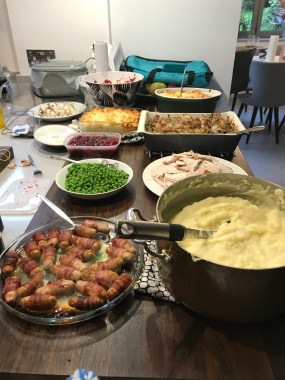
Later that evening, we feasted on a modified Thanksgiving dinner of roast chicken, sweet potatoes, mashed potatoes, cranberry chutney, broccoli casserole (made without Velveeta because unless you want to spend 89 pounds on amazon, it’s unattainable). Doug explained the Mayflower account to our guests, a couple from our church, and we went around the table and shared something(s) we were thankful for. It was sweet, and grew the lump in my throat that had formed during the St. Paul’s service. And then yesterday, Sunday, we were treated to real turkey and green bean casserole (doesn’t get any more American than that) and all the fixings by a British husband/American wife family

IMG_8421I’m not going to lie; Thanksgiving Day was difficult. I missed the markings of home, the pie social and parade and the sound of American football, and above all family. But God was good. He graciously gave us three Thanksgiving memories to cherish, and a newfound appreciation for citizenship.
You don’t often consider your country of citizenship, until you’re not living in your country of citizenship, but trying to secure a bank account and a school and a home and a doctor (when your daughter sprains her ankle) as a noncitizen opens your eyes to the fact that Citizenship is everything. My compassion for foreigners and immigrants has been stoked, and I’m in a country where I can understand about 85% of the language. No joke.

Moving somewhere, living somewhere, doesn’t magically turn you into a citizen. Citizenship comes by birth or by deliberate choice and effort. So when Paul says, “our citizenship is in heaven, and from it we await a Savior, the Lord Jesus Christ” this is no sugary sentiment. Citizenship defines who we are, it trumps home. We are making a home here in London, but that doesn’t change our American citizenship. We do live here on earth, but as believers in Christ, our citizenship is in heaven.

And the citizens that make up heaven will be from every tribe, tongue, and corner of the world, and that is something to be thankful for.

img_8428-e1543243794504.jpg

IMG_8679
So excited about the food, we failed to get a picture of our wonderful hosts!

Queued for Grace

border-control-queue-750x450

I limped over the UK border at my weakest point, and perhaps that was for the best.

The plane ride from Chicago to London was wonderfully uneventful, until the final hour when my insides turned against me. Not the kind of turning that left me reaching for that little paper bag in the pocket in front of me, but the kind that caused me to dash to the minuscule loo more than once, despite the illuminated fasten seatbelt sign.

Yep. That kind. Sorry if this is getting all too personal. I debated whether to write this blogpost and after I wrote it, debated whether to publish it. They say good writing is honest writing. I don’t know if that’s always true, but this is about as transparent as it gets.

This kind of intestinal rebellion (a result of a several factors from my medical history/food allergies/sensitivities which was that day no doubt exacerbated by airplane food, no sleep, nerve/stress) is nothing new to me. I’ve learned to deal with it in the context of my life. But when we were contemplating this move, I must admit, this weakness had been in my list of Why We Shouldn’t Go.

And here I was. Not even off the plane and my weakness was upon me. And fear. The thorn in my flesh was smarting something fierce.

By the time we reached the 800 mile-long immigration line I felt dehydrated, close to fainting, and as limp and feeble as an overcooked linguine noodle. I could literally feel sweat beading on my forehead as I fanned myself with my passport that contained my visa that expired THAT DAY. I had one day, this day, to enter the country (long story).

What if I don’t get in? What if we understood it wrong and I had to enter BEFORE the 20th? What if Doug and our daughter get in and I don’t?

These thoughts did nothing to calm any bodily part of me. But through the queue I trudged behind my daughter and husband, with my forty-pound backpack and Doug’s guitar. I caught his eye (later he told me I was as white as paper) and mouthed pray.

We’ve all reached that panic prayer point, I think, when our prayers turn manic. Desperate. Singular in focus.

Please sustain me Lord, please, please, please sustain me.

On and on the line wound, on and on I prayed, begged, fanned, seriously thought about bolting, prayed, begged, fanned some more until finally we reached the end. My husband, the main visa holder, endured a moment of scrutiny then stepped over the border. Then my daughter. And then I, feeling like I might slither to the floor, was welcomed into the UK, into our new life, into the unknown.

I take no delight in airing such personal complications. But as I’ve reflected, as I’ve considered how this whole process of serving in London has been fraught with struggle – joys, yes, but more so struggle – I see how fitting it is to enter so weakly, so dependently so desperately clinging to God’s good grace moment by moment. Because we are that dependent. We don’t often see it when we’re strong and confident and well rested, but even then, anything good we have, any good we’re capable of doing – deciphering a street sign, solving a problem, stepping forward – is a reverberation of God’s grace. Our weaknesses, if we let them, bring us back, or bring us more fully, to the gospel: weakness compels us to grab on to the hand of the rescuer, to receive what we can’t earn. To embrace Christ’s death and resurrection as payment for our un-payable debt. To raise our dead selves to life.

Weakness is where we meet, and re-meet, God.

He sustained me/us through the steps it took to get here, He sustained me through the immigration line, He sustained me as we made our way to baggage, the very last people to gather our belongings: Five big suitcases and three huge duffels, holding the bits and pieces we chose to help us start our new life, now carelessly tossed from carousel to ground. The three of us managed to load the eight giant pieces, three carry-on suitcases, three bursting at the seams backpacks, personal items, and one guitar on three carts. Even my intestinal turbulence couldn’t prevent me from swelling with pride at the sight of my petite thirteen-year-old daughter maneuvering her man-sized load through the halls of Heathrow to our new adventure, an adventure that certainly wasn’t of her choosing. Our possessions heaped before us, we journeyed on until we saw the familiar faces of our friends and team leaders, and the big gloriously sunny city beyond the airport’s glass window.

He sustains. Moment by moment, He sustains.

But he said to me, “My grace is sufficient for you, for my power is made perfect in weakness.” Therefore I will boast all the more gladly of my weaknesses, so that the power of Christ may rest upon me. – 2 Cor. 12:9

I blinked

Wasn’t it yesterday that we forgot the chicken in the microwave? That day when the nurse called to tell me that my strep test came back negative, but my pregnancy test came back positive, and in our delirious excitement we neglected the chicken thawing in the microwave for dinner, forgot about it until breakfast, and went out for celebratory pizza instead? Didn’t that just happen?

Wasn’t that baby just born, that sweet pink baby that kept us up at night, that toddler with the infectious laugh and lively eyes, who learned to ride a bike, then mow the lawn, then shave? How can it be that, days ago, we dropped that baby, kid, young man at college? Seriously, how is this possible?  

IMG_E7933 mom&son

These past few months, my heart has been stuck in my throat. Emotions and thoughts churned so thick I was unable to write. I needed to live through some of it first, be in these past three months that resembled a country song:

We said goodbye to our dog

our home

most of our stuff

jobs.

We said goodbye to our boy.

And it was all hard.

This isn’t meant to be woe-is-me. There’s good in all of this, and I’ll get to it in a moment. But first you gotta mourn. Before you get up, dust yourself off, and count your blessings, first you need to cry.

The good in all of this:

By God’s good grace, we gave our dog to a dog-loving woman who’ll give her a good life, better than we could give her in London.

By God’s good grace, we sold our house in four days, have friends who helped us move and clean, and family to welcome us in.

By God’s good grace we slowly but surely handled every last possession, weighed its worth, made a decision, and moved on to newfound liberation.

By God’s good grace, we have a wonderful, loving, hard-working son who is embarking on a new exciting chapter at college, a son we still get to parent, but in a different way.

And by God’s good grace, even though this season is foreign and frightening, it’s also exciting. Because while this season feels out of our control, it’s very much in the control of the Lord of days and seasons and minutes and hours, the God who wields time. The God who holds time, the God who made time.

From the beginning, when God separated darkness from light and called it a day, counted out six of those days and showed us how to rest on the seventh, he was the Lord of time. Days, weeks, months, seasons and years, we’ve never had control over it. Yes, we mark our calendars (diaries for my UK friends) and structure our moments, striving to make the most of every opportunity (Eph 5: 15-17, Col 4:5-6). But where is the scientist, or athlete, or billionaire, who can manipulate one second? Who can stop the sun from rising, who can freeze a moment until she’s ready to let it go?

Leaves fall,

Friendships form,

Children grow up.

All in God’s time.

All in God’s good time.

Show me O Lord, my end and the measure of my days. Let me know how fleeting my life is. You, indeed, have made my days as handbreadths, and my lifetime as nothing before You. Truly each man at his best exists as but a breath.  – Psalm 39:4-5

When Hope Died

Oh it was bleak
Those days in between.
When hope was dead.
Not wounded or missing, ill or asleep
but dead.

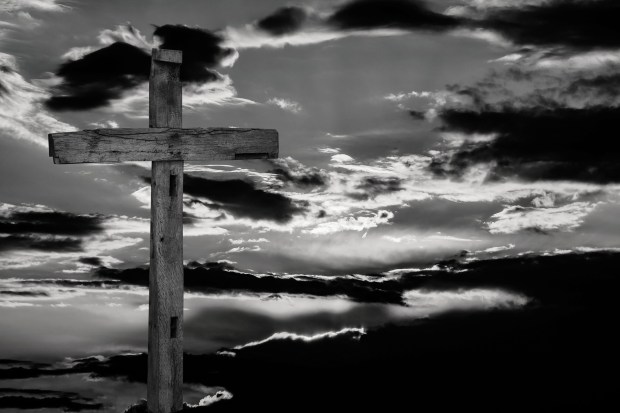
good-friday-3243347_1920

Lamb followed freely
to the execution tree
And before their own eyes,
hope breathed his last.

Spear pierced in, evidence poured out
Body was lowered, wrapped-up, entombed.
Hope said it himself, with final exhale:
It is finished.

What was finished? Light? Life? Goodness? Hope?
Darkness cackled, death crowed
Evil cheered, despair rose.

But sun set and sun rose.
Sun set and sun rose.

sunset-3176688_1920

And then.

And then what was hidden rushed forth
What was humiliated became adored
What was impossible came to be
What was bound broke free.

Gentle Lamb burst forth as Lion
Principalities bowed to his will
Nature, time, science– jumped to his bidding,
Light blinded darkness, death couldn’t prevail.

But oh.

Oh it seems bleak, in this time in between.
Darkness spreading, breeding, boasting
Seeming to conquer, seeming to win
Light seems dimmer, good is thinner,
hope seems frailer, evil feels stronger
As we wait our three days of darkness.

We wait our time in between
The empty tomb but a prelude
of the glory we hope to see.
For death was defeated for always,
and darkness of soul can be lit.
He who drowns can be caught up and rescued
she who’s soiled can be washed and redeemed.

For Lamb laid down without struggle
burst forth as Lion from grave.
We hold this truth in these vessels.
Because Our Hope died
Because Our Hope lives.

© 2018 Rachel Allord

spring-awakening-3132112_1920